Alkaline water
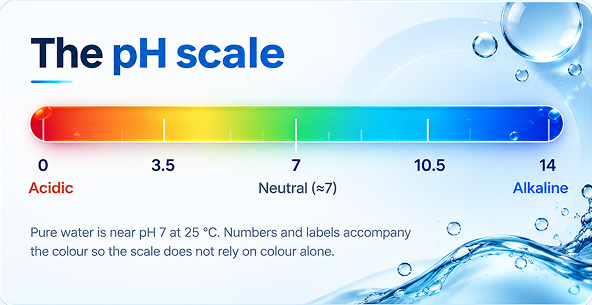
Water is described as alkaline when its pH is above 7. pH measures hydrogen-ion activity on a scale from 0 to 14, and the value of any water depends on its source and treatment.
WHAT IS ALKALINE WATER?
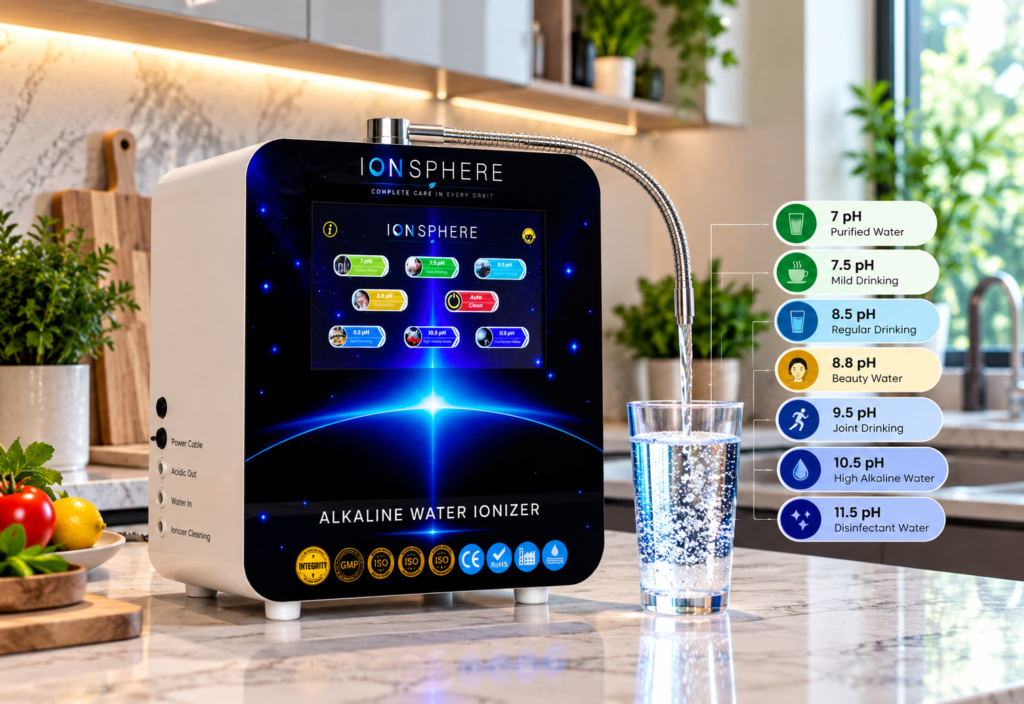
Alkaline water is water with a pH level above 7. It can occur naturally when water passes through mineral-rich rocks or can be produced using a water ionizer through a process called electrolysis.
WHY DOES pH MATTER?
The pH scale measures how acidic or alkaline water is. It ranges from 0 to 14, with 7 considered neutral. Water ionizers allow users to select different pH levels for suitable household applications.
KEY CHARACTERISTICS OF ALKALINE WATER
Has a pH level above 7.
Can be produced through water electrolysis.
May contain naturally occurring dissolved minerals.
Hydrogen-Rich water
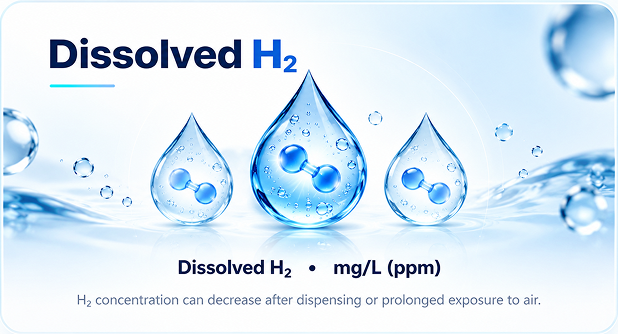
Hydrogen-rich water contains dissolved molecular hydrogen (H₂). The amount present depends on how it is produced, stored and measured.
WHAT IS HYDROGEN-RICH WATER?
Hydrogen-rich water is water that contains dissolved molecular hydrogen (H₂), a colorless and odorless gas.
WHY DOES HYDROGEN MATTER?
Researchers are investigating how dissolved hydrogen may interact with oxidative stress and cellular processes.
BENEFITS OF HYDROGEN-RICH WATER
Provides dissolved molecular hydrogen (H₂).
Is being researched for antioxidant activity.
May influence certain oxidative stress markers.
Antioxidant properties
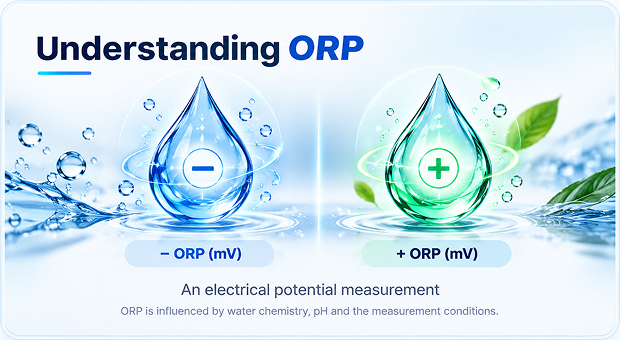
Antioxidants take part in oxidation–reduction reactions. Water ionizers may be described using oxidation-reduction potential (ORP), which is a measurement of electrical potential.
WHAT ARE ANTIOXIDANT PROPERTIES?
Antioxidants are substances that help protect cells from damage associated with oxidative stress, which occurs when the production of reactive molecules exceeds the body's ability to manage them.
WHY DO ANTIOXIDANTS MATTER?
While some are essential for biological signaling, excessive oxidative stress can contribute to cellular damage.
KEY POINTS ABOUT ANTIOXIDANT ACTIVITY
A negative ORP value by itself does not prove antioxidant activity inside the human body or a clinical health benefit.
Mineral content
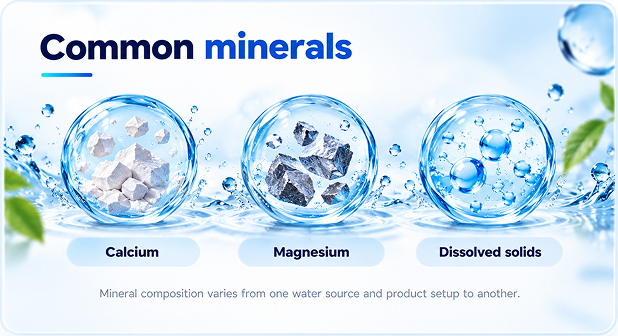
Water can contain dissolved minerals such as calcium and magnesium. The amounts depend primarily on the source water and any treatment or filtration stages.
WHAT IS MINERAL CONTENT IN WATER?
Drinking water may naturally contain essential dissolved minerals such as calcium, magnesium, potassium, and sodium.
WHY DOES MINERAL CONTENT MATTER?
Calcium and magnesium also play important roles in normal body functions, although food is generally the primary source of these nutrients.
KEY CHARACTERISTICS OF MINERAL-RICH WATER
May contain naturally occurring calcium and magnesium.
Mineral composition influences water taste.
Mineral levels vary according to the water source.
Micro-clustered water
Micro-clustered water is a term used in some ionized-water marketing materials. It is sometimes presented as water containing smaller groups of molecules.
WHAT IS MICRO-CLUSTERED WATER?
Micro-clustered water is a term sometimes used in the water ionization industry to describe water that is claimed to contain smaller groups of water molecules.
HOW DO WATER MOLECULES BEHAVE?
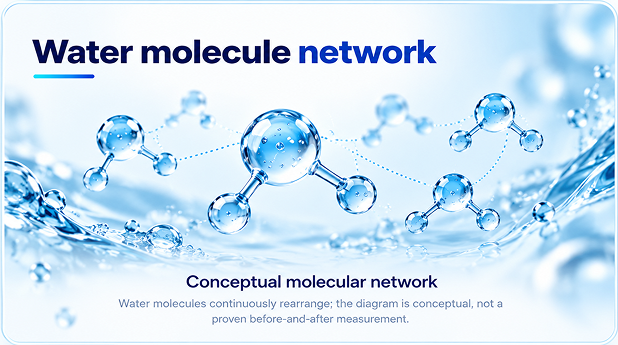
Water molecules form temporary connections through hydrogen bonding. These molecular arrangements constantly change over extremely short timescales.
IMPORTANT FACTS ABOUT WATER STRUCTURE
Water molecules consist of hydrogen and oxygen (H₂O). Water's molecular structure is dynamic.